Bohemian Arms: Sears Peyton, New York


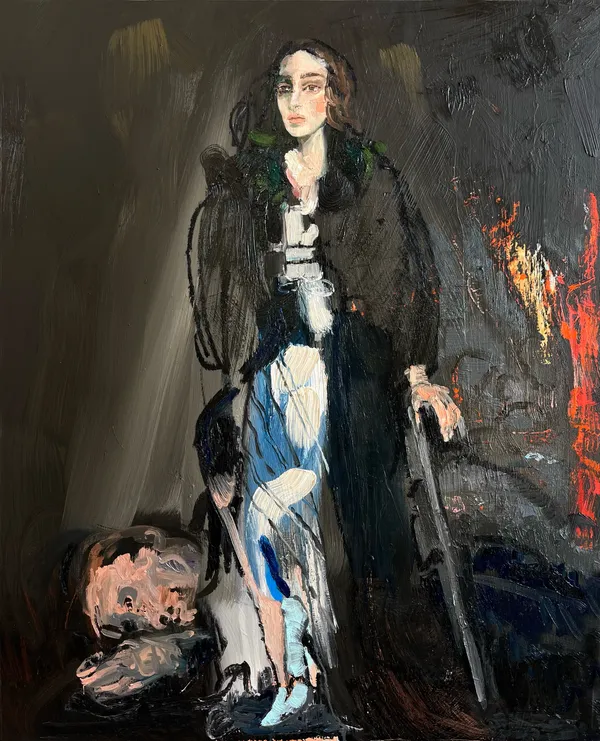

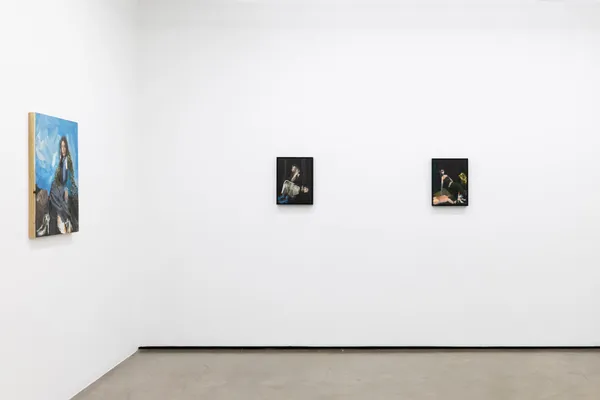


New York, NY— Sears-Peyton Gallery is pleased to present a solo exhibition by painter Suzy Spence. In Bohemian Arms, Spence presents a new body of work in which elegance and injury exist in uneasy proximity. Here, the artist sharpens her contemporary register, modernizing her sartorial language while extending the dynamic of hunter and hunted into the present.
Spence occupies a singular space within the medium of painting. Her constructed portraits and fictitious worlds draw on hunting traditions from British sporting art, time-based drips and gestures associated with the New York School, and canonical references ranging from Francisco Goya to Paula Rego. Narrative hovers in the work, but it’s offered only as a possibility.
Her recent research into the physical properties of oil paint, after decades of working exclusively in water-based mediums, has opened a new chromatic field. The results are sensuous and complex, marked by depth and texture. Color combinations seem to borrow their logic from processes foreign to painting proper—printed fashion photography and performative image culture—yielding something akin to alchemical transformation. She takes these elements as a point of departure, using them to uncover the latent potential of the painted surface.
Injury to both the principal subject and the fallen figure in her Fashion Victim paintings, becomes tangible through languid bodies and at times, the presence of walking canes—a prop long associated with dandies, but also a medical device Spence herself relied on after a dramatic riding accident in 2019.
In the largest work, a 40 × 48 inch oil portrait titled Grandstand, echoes of de Kooning’s urgency meet Sargent’s formal elegance in the figure of a woman watching a horse race. In Fashion Victim (Blue Velvet), 12 × 16 inches, a young woman in a skirt and electric blue heels sits casually against a deep brown ground, her long red nails resting on what appears to be a man’s head beneath her; the scene carries the polished language of fashion imagery, though the narrative remains unsettled.
Bohemian Arms asks what remains after spectacle dissolves, and what it means to stand—injured, adorned, unrepentant—within the structures that shape both dominance and vulnerability.